
Mexican bread offers some of the world’s most beloved baked goods, from sweet treats to savory loaves. Each region of Mexico has its own special recipes passed down through families for generations.
These breads range from simple daily staples to festive holiday specialties. Whether you want to make classic conchas with their signature shell-like topping, crusty bolillo rolls for sandwiches, or festive breads for special occasions, these recipes will guide you through each step.
From traditional sweet breads and flaky pastries to cheese-filled loaves and holiday specialties, you’ll discover the essential ingredients and baking methods that make Mexican bread so special.

1. Conchas – classic Mexican sweet bread with a soft cinnamon streusel topping
Conchas are Mexico’s most beloved sweet bread. You’ll recognize them by their shell-like pattern on top.
The bread itself is soft and fluffy like brioche. It contains butter, milk, and yeast for a rich texture.
The signature topping comes from flour, sugar, and butter. This creates a sweet, crunchy layer that contrasts the soft bread underneath.
You can find conchas in chocolate or vanilla flavors. The streusel topping gets scored in a crosshatch pattern before baking.
These breads are perfect for breakfast with coffee or hot chocolate.

2. Bolillo – crusty Mexican white bread roll
Bolillo is Mexico’s most popular white bread roll. You’ll find these oval-shaped rolls in bakeries across Mexico and Central America.
The bread has a hard, golden crust that cracks when you bite it. Inside, the bread is soft and fluffy like a pillow.
You can use bolillos for sandwiches or tortas. They also work well as a side bread for soups and saucy dishes.
The rolls taste similar to French baguettes but have a different shape. Traditional bolillos bake in stone ovens for the best crust.
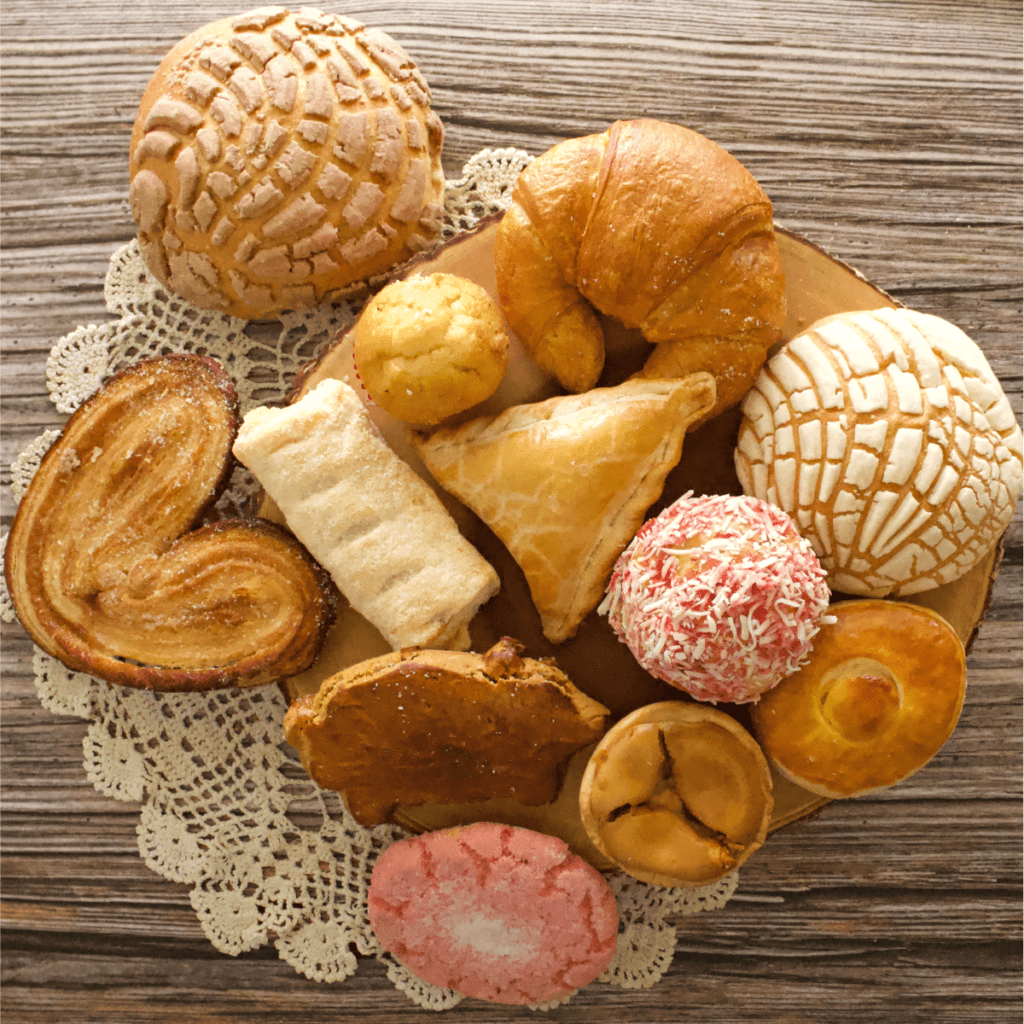
3. Pan Dulce – assortment of traditional Mexican sweet breads
Pan dulce refers to Mexico’s collection of sweet breads and pastries. You can find these treats at any panadería or bakery across Mexico.
These breads come in many shapes, flavors, and textures. Each region has its own names for different varieties.
The most popular type is conchas. These round breads have a shell-shaped sugar topping that gives them their name.
You’ll also find cuernos, empanadas, and puerquitos among the many options. Wheat arrived in Mexico with Spanish colonizers, which started the bread-making tradition.

4. Mexican Garlic Cheese Bread – savory loaf with olives and jalapeños
This bread combines garlic butter with melted cheese for a rich flavor. You’ll find olives and jalapeños mixed throughout the loaf.
The recipe uses Italian bread as the base. You spread a mixture of cheese, garlic, and vegetables on top.
Popular cheese choices include Monterey Jack, cheddar, and Parmesan. The jalapeños add heat while olives provide a salty taste.
You bake it at 350°F for 15-20 minutes until the cheese bubbles. This makes a great side dish for Mexican meals.

5. Mantecada – moist Mexican muffin-like bread
Mantecada is one of Mexico’s most popular sweet breads. These muffins have a light, fluffy texture with a golden yellow color.
You can easily recognize them by their bright red paper liners. They taste mildly sweet with hints of orange and vanilla.
The top is slightly crunchy while the inside stays soft and moist. You can make them quickly with basic ingredients like flour, eggs, butter, and sugar.
They’re perfect for breakfast with coffee or as an afternoon snack.

6. Orejas – puff pastry elephant ears with sugar
Orejas are sweet Mexican pastries that get their name from the Spanish word for “ears.” They look like elephant ears because of their curved shape.
You make orejas with just three simple ingredients: puff pastry, sugar, and cinnamon. The pastry gets folded with the sweet mixture inside.
When you bake them, the sugar turns golden and creates a crispy coating. The result is a light, flaky pastry with caramelized sugar on the outside.
You can find orejas at Mexican bakeries throughout the country. They work well for breakfast, as a snack, or for dessert.

7. Cuernito – Mexican croissant with a slightly sweet dough
Cuernitos are traditional Mexican sweet breads shaped like little horns. They look similar to croissants but have their own unique taste and texture.
These pastries use a yeast-based dough enriched with sugar and lard. This makes them denser and sweeter than regular croissants.
You can enjoy cuernitos for breakfast or as an afternoon snack. They pair perfectly with coffee or hot chocolate.
The dough often includes warm spices. Many bakers dust the finished bread with cinnamon sugar for extra sweetness.

8. Empanadas de Camote – sweet potato-filled pastry
Empanadas de camote are Mexican pastries filled with spiced sweet potato. The name comes from “empanar,” meaning “to wrap in bread.”
You’ll find these treats at Mexican bakeries across the country. The filling combines mashed sweet potatoes with warm spices like cinnamon and anise.
The pastry dough wraps around the sweet filling. You can bake or fry them until golden brown.
These empanadas work well as desserts or snacks. They offer a perfect balance of flaky crust and creamy sweet potato filling.

Polvorones are beloved Mexican shortbread cookies with a crumbly, melt-in-your-mouth texture. The name comes from “polvo,” meaning dust in Spanish.
You’ll find these buttery treats in Mexican bakeries across the country. They often come in bright colors like pink, yellow, and white.
The basic recipe uses flour, sugar, butter, and eggs. Some versions include vanilla or cocoa powder for extra flavor.
You bake them for 12-14 minutes until they spread and crack but don’t brown. The cookies should have a tender, powdery texture when done.

10. Rosca de Reyes – festive sweet bread served on Three Kings Day
Rosca de Reyes is a special sweet bread eaten on January 6th for Three Kings Day. This traditional Mexican treat is shaped like a crown with colorful candied fruits on top.
The bread has a soft texture and orange flavor. A small figurine representing baby Jesus is hidden inside the dough before baking.
You can pair this festive bread with Mexican hot chocolate or atole. Most people buy Rosca de Reyes from bakeries rather than making it at home.

11. Teleras – flat Mexican sandwich bread
Teleras are soft Mexican bread rolls with two deep grooves that create three raised sections. You’ll recognize them by their golden color and light flour dusting.
These rolls have a thin, crispy crust on the outside. The inside stays soft and fluffy, making them perfect for sandwiches.
You can use teleras to make tortas, which are traditional Mexican sandwiches. They hold fillings well because of their sturdy yet tender texture.
Making teleras at home gives you fresher bread than store-bought versions. You can enjoy them warm from the oven.

Biscochos are traditional Mexican shortbread cookies with a crispy texture. You’ll taste warm cinnamon and anise flavors in every bite.
These cookies get rolled thin and cut into shapes like stars or fleur-de-lis. After baking, you coat them in cinnamon sugar while they’re still warm.
You can serve biscochos with coffee or tea for the perfect pairing. The crisp texture makes them ideal for dipping.
Different regions make biscochos slightly different ways. Some recipes use white wine or fruit juice for extra flavor.

13. Pan de Muerto – skull-shaped bread for Day of the Dead
Pan de Muerto is a traditional Mexican sweet bread made for Día de los Muertos celebrations on November 1st and 2nd. You’ll recognize this bread by its round shape and bone decorations made from dough pieces on top.
The circular bread represents the cycle of life and death. You can shape the extra dough into skulls, crossbones, or teardrops as symbols.
This slightly sweet bread has orange zest flavoring and gets topped with sugar. You’ll find it has a soft, airy texture inside with a golden-brown crust outside.

14. Jericalla – Mexican baked custard dessert bread
Jericalla is a creamy Mexican custard dessert from Guadalajara. You make it with simple ingredients like milk, eggs, sugar, vanilla, and cinnamon.
This dessert sits between flan and crème brûlée. It has a smooth, creamy inside with a golden brown top that gets slightly burnt during baking.
You bake jericalla in individual dishes or one large pan. The custard sets in the oven while developing its signature caramelized top layer.

15. Chocobanana Bread – chocolate chip banana bread with Mexican spices
This Mexican-inspired banana bread combines ripe bananas with rich chocolate and warm spices. You’ll taste the familiar sweetness of banana bread with exciting new flavors.
Traditional Mexican spices like cinnamon and cayenne pepper add depth to this treat. The chocolate chips melt perfectly into the moist banana base.
You can use dark chocolate chunks for a richer taste. The spices create a gentle heat that balances the sweetness without being too strong.
This bread works great for breakfast or dessert. The Mexican spices make it different from regular banana bread.

16. Pan Frances – French-inspired Mexican bread roll
Pan Frances is the same bread as bolillos. French bakers brought this recipe to Mexico in the 1800s.
You’ll get crusty rolls that look like small baguettes. They measure about 6 inches long and taper at both ends.
The bread has a hard crust outside and soft interior. You can use pan frances for sandwiches or toast it with butter.
This bread works well for tortas or just eating plain with coffee.

17. Pan de Elote – Mexican corn cake bread
Pan de elote is Mexican sweet corn cake that differs greatly from American cornbread. You’ll find it uses fresh corn kernels and sweetened condensed milk instead of sugar.
The texture falls between bread pudding and moist cake. The corn kernels add extra texture throughout each bite.
You can serve this versatile bread as either dessert or breakfast. It’s light, sweet, and perfect for summer meals.
The recipe requires simple ingredients like fresh white corn, condensed milk, and less flour than traditional cornbread recipes.

18. Cuajada Bread – cheese-filled soft bread
Cuajada bread comes from Colombia and features a unique cheese called cuajada. This soft bread combines the tangy cheese with butter, sugar, eggs, and flour.
You can substitute cuajada with farmer cheese or queso fresco since cuajada is hard to find outside Colombia. The bread also includes cornmeal for extra texture.
This cheese bread offers a perfect balance of sweet and savory flavors. The soft texture makes it great for breakfast or snacking throughout the day.

19. Pan de Cajeta – bread filled with caramel goat milk spread
Pan de Cajeta features soft bread filled with cajeta, a rich Mexican caramel made from goat’s milk. The filling has a thick, gooey texture with deep, nutty flavors.
You can make the cajeta by slowly cooking goat’s milk with sugar until it thickens. This creates a more complex taste than regular caramel.
The bread dough wraps around the sweet filling, creating golden pastries when baked. Each bite combines flaky bread with the smooth, caramel-like center.

20. Conchitas de Cajeta – small sweet breads topped with cajeta
Conchitas de cajeta are small Mexican sweet breads with a rich caramel topping. You make these using the traditional concha bread base.
The bread itself is soft and fluffy. It has a light sweetness that pairs well with toppings.
Cajeta is a thick Mexican caramel sauce made from goat’s milk. You spread this golden topping over the small breads before baking.
These mini treats are perfect with coffee or hot chocolate. The cajeta creates a slightly crispy top layer while keeping the bread moist underneath.

21. Pan de Rosca – ring-shaped bread with dried fruit and nuts
Pan de Rosca is a sweet Mexican bread shaped like a ring. You’ll find it topped with colorful dried fruits and nuts.
This bread uses a yeasted dough made with butter, sugar, and eggs. Orange zest gives it a citrus flavor that makes it special.
The ring shape represents a crown. Candied fruits on top look like jewels decorating the bread.
You can make this bread at home using basic ingredients. Top it with candied cherries, figs, or nuts like pecans and almonds.
Key Ingredients in Mexican Bread
Mexican bread relies on specific flours like all-purpose and masa harina that create unique textures. Traditional spices such as cinnamon and anise give these breads their distinctive flavors.
Cultural mixing has shaped ingredient choices over centuries.
Traditional Flours and Grains
All-purpose flour forms the base of most Mexican breads. You’ll find it in conchas, bolillos, and pan dulce recipes.
Many bakers combine all-purpose flour with bread flour. This mix gives you better structure and chewiness in your finished loaves.
Masa harina appears in some traditional recipes. This corn flour adds authentic flavor and different texture to your breads.
Some recipes call for cornmeal mixed with wheat flour. This combination creates breads with subtle corn flavor and slightly grainy texture.
You can also use whole wheat flour in certain regional breads. This flour adds nutty flavor and denser texture to traditional recipes.
The flour choice affects your bread’s final texture. All-purpose flour makes softer breads, while bread flour creates chewier results.
Essential Spices and Sweeteners
Cinnamon ranks as the most common spice in Mexican sweet breads. You’ll sprinkle it on top of conchas and mix it into dough for extra flavor.
Anise seeds give breads like pan de muerto their distinctive taste. These small seeds add licorice-like flavor that’s popular in holiday breads.
Vanilla extract sweetens many Mexican bread recipes. You’ll add it to doughs and glazes for rich flavor.
Orange zest brightens sweet breads with citrus notes. Fresh zest works better than dried for maximum flavor impact.
Granulated sugar sweetens most doughs. Some recipes use brown sugar for deeper molasses flavor.
Honey appears in certain traditional breads. It adds moisture and complex sweetness that regular sugar cannot match.
Piloncillo (unrefined cane sugar) gives authentic flavor to traditional recipes. This cone-shaped sugar has rich, molasses-like taste.
Role of Cultural Influences
Spanish colonization brought wheat flour to Mexico. Before this, indigenous people used only corn for making breads and tortillas.
French influence shaped many Mexican sweet bread techniques. The concha design comes from French shell-shaped pastries that Mexican bakers adapted.
Indigenous ingredients like vanilla and chocolate merged with European baking methods. This combination created unique flavors found nowhere else.
Regional preferences affect ingredient choices. Northern Mexico uses more wheat, while southern regions incorporate more corn-based ingredients.
Catholic holidays influenced specific bread ingredients. Pan de muerto includes orange zest and anise because these flavors honor the dead during Day of the Dead celebrations.
Modern Mexican baking blends traditional indigenous ingredients with European techniques.
Techniques for Baking Authentic Mexican Bread
Master the art of Mexican bread making through proper fermentation timing, traditional shaping methods, and the right equipment. These fundamental techniques will help you create bakery-quality results at home.
Proper Fermentation Methods
Mexican breads rely on slow fermentation to develop their signature flavor and texture. Most traditional recipes use active dry yeast or fresh yeast for the best results.
First Rise Timing
Let your dough rise for 1-2 hours at room temperature. The dough should double in size during this time.
Mexican bakers often use a cool fermentation method. Place your shaped dough in the refrigerator overnight for 8-12 hours.
This slow rise creates better flavor.
Temperature Control
Keep your dough at 75-80°F for optimal fermentation. Too hot and the yeast works too fast.
Too cold and fermentation slows down.
Test your dough by gently poking it with your finger. If it springs back slowly, it’s ready for the next step.
Shaping and Decoration Styles
Traditional Mexican breads have distinct shapes that affect both appearance and texture. Each style requires specific techniques to achieve authentic results.
Concha Shaping
Roll dough into smooth balls, then place seam-side down on baking sheets. Press the topping firmly onto each ball using a concha press or knife.
Bolillo Formation
Shape dough into oval logs about 6 inches long. Taper the ends and make a deep slash down the center with a sharp knife.
Pan Dulce Patterns
- Use a knife to create shell patterns on conchas
- Make cross cuts on the top of bolillos
- Roll orejas into ear-like shapes
Work quickly when shaping to prevent the dough from overproofing. Keep unused portions covered with a damp towel.
Baking Tools and Equipment
The right tools make a big difference in creating authentic Mexican breads. You don’t need expensive equipment, but certain items help achieve professional results.
Essential Tools
- Stand mixer with dough hook
- Kitchen scale for accurate measurements
- Bench scraper for handling dough
- Sharp knife or razor blade for scoring
Specialty Items
A concha cutter creates the traditional shell pattern on sweet breads. You can substitute with a knife if needed.
Baking Setup
Use heavy-duty baking sheets lined with parchment paper. Avoid dark pans that can burn the bottoms.
Preheat your oven to the exact temperature called for in recipes. Mexican breads often bake at moderate temperatures between 350-375°F.
A spray bottle helps create steam for crusty breads like bolillos. Spray the oven walls right after loading the bread.
Frequently Asked Questions
What are some classic varieties of Mexican bread to try at home?
Conchas are the most popular Mexican sweet bread. They have a soft interior and a crunchy cookie-like topping that looks like a shell.
Bolillo is a crusty white bread roll similar to French bread. You can use it for sandwiches or eat it with meals.
Pan de muerto is a special bread made for Day of the Dead celebrations. It has a sweet flavor and orange zest.
Tres leches cake bread combines the flavors of the famous dessert into bread form. It stays moist and has a sweet milk flavor.
How do traditional Mexican bread recipes vary by region?
Northern Mexico focuses more on wheat-based breads like bolillos and flour tortillas. The region uses more butter and lard in their recipes.
Central Mexico has the most variety in sweet breads. Mexico City is famous for conchas and other pan dulce varieties.
Southern regions often include corn flour in their bread recipes. They also use more tropical ingredients like coconut and plantains.
Coastal areas add ingredients like coconut milk and tropical fruits. Their breads tend to be moister due to the humid climate.
What are essential ingredients for authentic Mexican bread baking?
All-purpose flour forms the base of most Mexican breads. You need it for structure and texture.
Lard or butter creates the rich flavor and tender crumb. Traditional recipes often call for lard, but butter works too.
Mexican vanilla gives a deeper flavor than regular vanilla extract. You can find it at Mexican grocery stores.
Piloncillo is unrefined brown sugar that adds molasses-like sweetness. Regular brown sugar can substitute if needed.
Fresh eggs help bind the ingredients and create a rich texture. Room temperature eggs work best for mixing.
Can you recommend any beginner-friendly Mexican bread recipes?
Mantecadas are Mexican muffin-like breads that are very easy to make. They require basic ingredients and simple mixing methods.
Basic bolillos are good for beginners who want to try yeast breads. The recipe is straightforward and forgiving.
Simple conchas let you practice the two-part technique of bread and topping. You can master the basics before trying complex variations.
Mexican garlic cheese bread combines familiar flavors in an easy loaf format. It doesn’t require special shaping techniques.
What are the steps to achieve the perfect texture for Pan de Muerto?
Start with active dry yeast dissolved in warm milk. The mixture should foam within 5 minutes to ensure the yeast is working.
Knead the dough for 8-10 minutes until it becomes smooth and elastic. Proper kneading develops the gluten structure.
Let the dough rise in a warm place for about 1 hour. It should double in size during this first rise.
Shape the bread and add the traditional bone decorations on top. Brush with egg wash for a golden color.
Bake at 350°F for 25-30 minutes until golden brown. The internal temperature should reach 190°F when done.
Which Mexican breads are suitable for special occasions and festivals?
Pan de muerto is the traditional bread for Day of the Dead celebrations in November. Families place it on altars to honor deceased loved ones.
Rosca de reyes is eaten during Three Kings Day in January. This ring-shaped sweet bread has candied fruits on top.
Wedding cookies and special conchas appear at Mexican weddings. Bakers often decorate them with intricate designs and add extra sweetness.
Empanadas de dulce work well for birthday parties. You can fill them with different sweet fillings.
During Christmas, people enjoy special breads like buñuelos and sweet empanadas. Families share these treats during posadas and holiday gatherings.