
Polish cuisine offers a rich collection of hearty, comforting dishes that have been passed down through generations. These traditional recipes showcase the country’s culinary heritage through simple yet flavorful ingredients like potatoes, cabbage, meat, and seasonal vegetables.
You can easily recreate authentic Polish flavors in your own kitchen with these time-tested recipes. They range from savory main dishes to sweet desserts.
From famous dumplings and warming soups to traditional sausages and festive cakes, Polish cooking brings together satisfying meals. These dishes are perfect for any occasion.

1. Traditional Polish Pierogi
Pierogi are Poland’s most famous dumplings. You make them with simple dough filled with potatoes, cheese, or meat.
The most popular type is Pierogi Ruskie. This version uses mashed potatoes and farmer’s cheese as filling.
Boil pierogi first, then pan-fry them until golden. Serve with sour cream, butter, or fried onions.
Many Polish families pass down their pierogi recipes. Each family has their own special way to make the dough and filling.

2. Kielbasa Sausage
Kielbasa is Poland’s most famous sausage. You can find it fresh or smoked at most grocery stores.
This sausage combines pork and beef with garlic and spices. The smoky flavor makes it perfect for many dishes.
Cook kielbasa by boiling, grilling, or pan-searing. It comes pre-cooked, so preparation is quick and easy.
Try kielbasa in soups, stews, or casseroles. It also works well in skillet meals with cabbage or potatoes.

3. Bigos (Hunter’s Stew)
Bigos is Poland’s most famous stew. You’ll find it made with sauerkraut, fresh cabbage, and various meats like sausage, pork, or beef.
This hearty dish started as food for hunters in medieval times. Today, Polish families serve it during Christmas and other special occasions.
You can make bigos with any leftover meats you have. The stew develops better flavor when you slow-cook it for hours.
The tangy sauerkraut mixes with mushrooms, onions, and spices. Many recipes add dried plums or apples for sweetness.
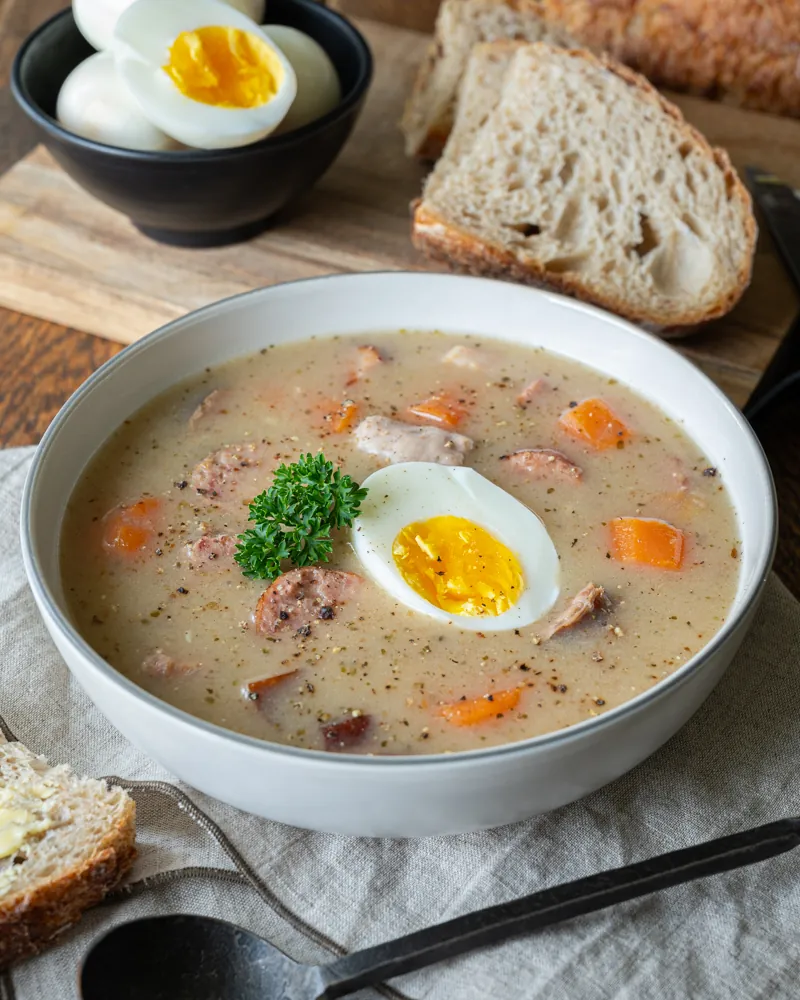
4. Żurek (Sour Rye Soup)
Żurek is Poland’s famous sour rye soup. Its tangy flavor comes from fermented rye flour starter called zakwas.
The soup contains white sausage, bacon, and hard-boiled eggs. Many recipes add potatoes and sour cream too.
You can buy the rye starter at Polish stores or make your own. The soup takes time to prepare but tastes amazing.
Polish families often serve żurek at Easter dinner. You’ll find it served in bread bowls at restaurants across Poland.

5. Cabbage Rolls (Gołąbki)
Gołąbki are one of Poland’s most beloved comfort foods. The name means “little pigeons” in Polish.
These stuffed cabbage rolls contain ground meat and rice wrapped in tender cabbage leaves. You cook them in tomato sauce until they become soft and flavorful.
The filling combines ground beef, rice, and onions. Some recipes add mushrooms for extra taste.
You can serve gołąbki with tomato or mushroom sauce. This hearty dish makes a perfect family meal.

6. Placki ziemniaczane (Potato Pancakes)
You can make these crispy Polish potato pancakes with just a few basic ingredients. You need grated potatoes, onions, eggs, and flour.
The pancakes turn out crispy on the outside and soft inside. Fry them in a pan until golden brown.
Polish families often serve them with sour cream and a sprinkle of sugar. You can also try them with applesauce or mushroom sauce.
These budget-friendly pancakes work as a main dish or side dish. They come from Poland’s Mazovia region.

7. Barszcz (Beet Soup)
Barszcz is Poland’s famous beet soup with a bright red color. You’ll find this traditional dish served at Christmas Eve dinner across Polish families.
The soup has a clear, tangy broth made from beets. You can drink it from mugs or serve it in bowls with small mushroom dumplings called uszka.
Traditional barszcz gets its sour taste from fermented beet juice. Some quick versions use lemon juice or vinegar instead.
The soup is usually meatless, especially during holidays.

8. Haluski (Cabbage and Noodles)
Haluski is a classic Polish comfort food that combines simple ingredients into a hearty dish. You make it with egg noodles, fried cabbage, and onions cooked in butter.
This traditional recipe uses just a few basic ingredients. The cabbage gets caramelized until tender and sweet.
The buttery flavors soak into the noodles. You can add bacon or kielbasa for extra protein.
Some recipes include garlic or lemon to balance the richness. The dish cooks quickly and works well for weeknight dinners.

9. Chłodnik (Cold Beet Soup)
Chłodnik is Poland’s perfect summer soup. This bright pink dish cools you down on hot days.
You make it with cooked beets, yogurt or kefir, and fresh vegetables. The soup includes cucumbers, radishes, and plenty of dill.
The soup tastes tangy and refreshing. You can add hard-boiled eggs on top for extra protein.
This cold soup is ready in about 30 minutes. It’s a healthy and light meal for warm weather.

10. Kopytka (Potato Dumplings)
Kopytka are traditional Polish potato dumplings that taste similar to Italian gnocchi. The name means “little hooves” in Polish.
You make these dumplings with just four simple ingredients: mashed potatoes, flour, egg, and salt. The dough forms tender, soft dumplings that cook quickly in boiling water.
Serve kopytka with butter, bacon and onions, or meat drippings. They also pair well with mushrooms, sauerkraut, or hearty stews and goulash.

11. Sernik (Polish Cheesecake)
Sernik is Poland’s most beloved dessert. You’ll find it in every cafe and restaurant across the country.
This traditional cheesecake uses twarog, a Polish farmer’s cheese. The cheese creates a denser texture than American cheesecake made with cream cheese.
You build sernik on a simple shortcrust pastry base. The filling combines twarog with eggs and sugar for a creamy result.
Polish families pass down their own sernik recipes. Each version stays true to tradition.

12. Babka (Sweet Yeast Cake)
Babka is a beloved Polish sweet bread that families have made for generations. You’ll find this soft, cake-like treat served during Easter celebrations.
The traditional recipe uses yeast dough mixed with raisins and sugar. You can bake it in a bundt pan for the classic shape.
This golden cake has a light, airy texture when done right. Serve babka fresh after it cools, often sliced with butter on the side.

13. Faworki (Angel Wings)
Faworki are crispy Polish pastries that look like delicate ribbons. You might also hear them called chruściki or angel wings.
These light treats are made from rolled dough that gets twisted into shapes. Fry them in oil until they turn golden brown.
Polish families often make faworki during Carnival season and Fat Thursday. Dust them with powdered sugar before serving.
The dough contains flour, egg yolks, and sometimes vodka for extra crispiness. Use a pasta maker to roll the dough thin and save time.

14. Kaszanka (Blood Sausage)
Kaszanka is a traditional Polish blood sausage made with pig’s blood, pork, and buckwheat or barley groats. You might also see it called kiszka or krupniok in different regions.
This hearty sausage has deep roots in Polish cooking. People originally made it after butchering pigs to use every part of the animal.
Fry kaszanka with onions and apples. The combination creates a rich, savory dish that’s perfect for cold days.
You’ll find kaszanka at Polish grocery stores and international food markets.

15. Oscypek (Smoked Sheep Cheese)
Oscypek is Poland’s most famous traditional cheese. It comes from the Tatra Mountains in southern Poland.
This smoked cheese is made from sheep’s milk. The cheese has a salty, smoky taste and firm texture.
Eat oscypek grilled or pan-fried. Many people serve it with cranberry jam or lingonberry jam.
The cheese has a special spindle shape. Only certain Polish counties can produce it, as protected by EU law.

16. Flaki (Tripe Soup)
Flaki is a traditional Polish tripe soup made with beef tripe and vegetables. You’ll find this hearty dish at weddings and celebrations throughout Poland.
The soup uses beef tripe cut into thin strips. You cook it with carrots, celery, and onions in a beef broth base.
Polish cooks season flaki with marjoram, paprika, and nutmeg. Bay leaves and allspice add extra flavor to the soup.
Many Polish families believe flaki helps cure hangovers. Each cook passes down their own recipe through generations.

17. Piernik (Spiced Gingerbread)
Piernik is Poland’s traditional spiced gingerbread cake that dates back to the 12th century. You’ll find it’s quite different from regular gingerbread.
This moist cake uses honey as a sweetener and features warm spices like cinnamon, nutmeg, cloves, and cardamom. It’s less ginger-heavy than other gingerbreads.
You can make a quick version or follow traditional methods where the batter sits for weeks to develop deeper flavors. Polish families often bake piernik together during Christmas, filling homes with aromatic spices.

18. Makowiec (Poppy Seed Roll)
Makowiec is a traditional Polish sweet bread filled with ground poppy seeds. You roll yeast dough around a dense filling made with poppy seeds, butter, sugar, and honey.
The filling often includes raisins, walnuts, and citrus peel for extra flavor. Polish families commonly serve this dessert during Christmas and Easter celebrations.
Make makowiec with fresh ground poppy seeds or use canned filling from the store. The bread stays fresh for up to four days when stored in a cool place.
This vegetarian-friendly dessert pairs well with tea or coffee.

19. Kluski śląskie (Silesian Dumplings)
These soft potato dumplings come from the Silesia region in southwestern Poland. You’ll recognize them by their round, flattened shape with a small dent in the middle.
You make them with cooked potatoes and potato starch. The dough is simple to work with, even for new cooks.
Kluski śląskie work great as a side dish. Serve them with goulash, meat dishes, or rich sauces.
They’re a popular alternative to regular potatoes. You can find them fresh in Polish supermarkets or make them at home using starchy potatoes like Russets.

20. Golabki z grzybami (Mushroom Cabbage Rolls)
These Polish cabbage rolls feature tender leaves wrapped around savory mushroom filling. Make them with rice and mushrooms or add meat for extra protein.
Blanch the cabbage first to make rolling easier. Forest mushrooms work best for authentic flavor.
Cook the rolls in rich mushroom gravy that soaks into the cabbage. This makes them extra flavorful and moist.
They’re perfect for cold weather meals. Serve them alone or with mashed potatoes on the side.

21. Krupnik (Barley Soup)
Krupnik is a traditional Polish barley soup that brings comfort during cold months. You make this hearty dish with pearl barley as the main ingredient.
The soup usually includes chicken or other meat. Vegetables like carrots and celery add flavor.
Season it simply with bay leaves, allspice, and marjoram. You can prepare krupnik with regular stock or even whey from cheesemaking.
The name comes from “krupa,” which means pearl barley in old Polish.
Traditional Ingredients in Polish Cooking
Polish cuisine relies on hearty ingredients like potatoes, cabbage, and various meats. These create filling comfort foods.
Key seasonings include dill, marjoram, and caraway seeds. They give dishes their distinctive flavors.
Essential Pantry Staples
Rye flour forms the base for traditional Polish bread and sour rye starter used in żurek soup. You’ll find this ingredient in many authentic recipes.
Sauerkraut appears in countless Polish dishes, especially bigos (hunter’s stew). Polish cooks ferment fresh cabbage to create this tangy ingredient.
Potatoes serve as the foundation for many meals. You can use them in pierogi fillings, as side dishes, or in hearty soups.
Buckwheat and pearl barley add texture to soups and serve as filling grain dishes. These grains were historically important when wheat was expensive.
Dried mushrooms, particularly porcini, provide umami flavor to broths and sauces. Polish cooks rehydrate these mushrooms and use both the mushrooms and soaking liquid.
Typical Herbs and Spices
Dill ranks as the most popular herb in Polish cooking. You’ll use fresh dill in cucumber salads, potato dishes, and as garnish for soups.
Marjoram seasons meat dishes and appears in traditional sausage recipes. This herb gives Polish kielbasa its characteristic taste.
Caraway seeds flavor bread, cabbage dishes, and root vegetable preparations. The seeds add a slightly bitter, aromatic note.
Bay leaves go into slow-cooking stews and meat braises. You’ll remove them before serving.
Sweet paprika colors and flavors many dishes without adding heat. Hungarian influence brought this spice to Polish kitchens.
Popular Meats and Vegetables
Pork dominates Polish meat dishes. You’ll find it in fresh sausages, smoked kielbasa, and traditional roasts.
Cabbage appears fresh in salads or fermented as sauerkraut. White cabbage works best for most Polish recipes.
Onions form the aromatic base for most savory dishes. Yellow onions provide the best flavor for traditional cooking.
Root vegetables like carrots, parsnips, and turnips appear in winter stews and soups. These vegetables store well and provide nutrition during cold months.
Beets create the vibrant red borscht soup. Both fresh and pickled beets have their place in Polish cooking.
Tips for Achieving Authentic Polish Flavors
Polish cooking relies on slow-cooking methods and generous portions that bring families together. The way you present and serve these dishes matters just as much as how you prepare them.
Cooking Techniques
Start with lard or butter instead of vegetable oil. Polish cooks traditionally use these fats for deeper flavor in their dishes.
Cook your meats low and slow. Braising tough cuts like pork shoulder or beef chuck for 2-3 hours creates the tender texture Polish dishes are known for.
Use a heavy pot or Dutch oven for stews and soups. The thick bottom prevents burning and distributes heat evenly.
Season generously with these key spices:
- Sweet paprika
- Caraway seeds
- Bay leaves
- Fresh dill
- Black pepper
Add sauerkraut juice to soups and stews. This gives them the tangy flavor that makes Polish food distinctive.
Make your own roux by cooking flour and fat together until golden. This thickens sauces naturally and adds rich flavor.
Don’t rush the cooking process. Polish dishes develop their best flavors when ingredients have time to blend together.
Presentation and Serving Suggestions
Serve Polish meals family-style on large platters. This creates the communal feeling that’s central to Polish dining culture.
Always provide fresh bread on the side. Rye bread or crusty white bread helps soak up rich sauces and gravies.
Garnish with fresh herbs right before serving:
- Chopped dill on pierogi
- Parsley on meat dishes
- Chives on soups
Keep portions generous. Polish hospitality means never letting guests leave hungry.
Serve soup as a first course, followed by the main dish. This traditional meal structure helps pace the dining experience.
Use white or cream-colored dishes to show off the rich colors of Polish food. The presentation should look homey, not fancy.
Provide small bowls of sour cream and pickled vegetables as condiments. These add fresh contrast to heavy dishes.
Frequently Asked Questions
Polish cooking involves traditional ingredients like cabbage, potatoes, mushrooms, and sausage. These dishes work well for family meals and you can make them with common kitchen tools.
What are some traditional Polish dishes that I can prepare at home?
You can easily make pierogi, which are dumplings filled with potatoes, cheese, or meat. Bigos is another great choice—it’s a hearty stew made with sauerkraut and various meats.
Cabbage rolls stuffed with rice and ground meat are perfect for Sunday dinners. Żurek soup uses sour rye starter and Polish sausage for a warming meal.
Kielbasa sausage can be grilled, pan-fried, or added to soups and stews.
How can I make authentic Polish sausage at home?
Making kielbasa at home requires ground pork, garlic, and marjoram. You’ll need natural casings and a meat grinder or food processor.
Mix the meat with salt, pepper, and traditional spices like marjoram and garlic. Stuff the mixture into casings and twist into links.
You can smoke the sausages or cook them fresh by boiling or grilling. Fresh kielbasa takes about 20 minutes to cook through.
What are the top Polish comfort foods and their recipes?
Bigos ranks as Poland’s ultimate comfort food. This hunter’s stew combines sauerkraut, fresh cabbage, and multiple types of meat.
Pierogi filled with potatoes and cheese provide warmth and satisfaction. Serve them with fried onions and sour cream.
Żurek soup offers comfort with its tangy flavor and hearty ingredients. The soup includes Polish sausage, hard-boiled eggs, and sometimes bacon.
Could you recommend some Polish recipes suitable for family dinners?
Cabbage rolls make an excellent family meal since you can prepare them ahead of time. Stuff cabbage leaves with ground meat, rice, and onions.
Large batches of pierogi work well for feeding groups. Make several varieties with different fillings to please everyone.
Bigos improves with time and feeds many people. This stew tastes even better the next day after flavors blend together.
What ingredients are typically used in Polish cuisine?
Polish cooking relies heavily on cabbage, potatoes, and mushrooms. These vegetables appear in most traditional dishes.
Pork and beef are the main proteins, often in sausage form. Polish cuisine also uses plenty of onions, garlic, and dill.
Sour cream appears in many recipes as a garnish or ingredient. Rye flour creates the base for traditional soups like żurek.
Start with a simple soup like żurek. You can also make chicken broth with noodles.
Polish soups are filling and cook quickly on busy nights.
Pair kielbasa with sauerkraut and potatoes for a complete meal. This combination takes less than 30 minutes to prepare.
Make pierogi on weekends and freeze them for quick weeknight dinners. Boil frozen pierogi straight from the freezer in about 8 minutes.